
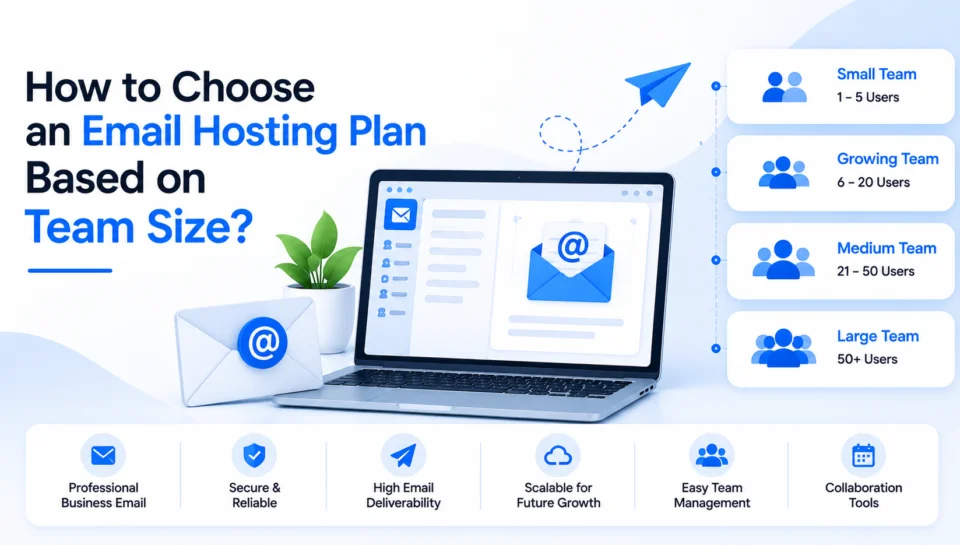
Teams of all sizes have some form of communication. Being able to communicate over email is essential for a freelancer, a start-up, and a large enterprise that manages all of their staff. Choosing the right professional email solution for your business affects your productivity, security, and daily business operations.
When looking for an email service provider in India, most businesses consider the costs and the storage space offered by the provider. However, the size of the business is also important. As the business and the team grow, the needs and demands for communication, collaboration, and security also grow.
Different Departments Have Versatile Email Needs
Different teams and departments in a business utilize email differently. The sales team might use email to send communications and proposals to clients, while the HR team may use messages to send and receive personal and confidential information about employees. The finance team may use email to send and receive invoices and other financial-related documents.
When selecting an email hosting plan, businesses should look at the needs of each individual department. Departments use email differently, and a hosting plan that supports the needs of the different departments helps improve business operations while ensuring that each department has the tools to work efficiently.
Email Deliverability Is Equally Important as Storage
A huge mailbox doesn’t matter without email deliverability. Missing key emails negatively impacts communication with customers, vendors, and business partners. Poor deliverability impacts business reputation and lost sales and customers.
Plans with deliverability and authentication infrastructure and thorough management of spam and email are essential for successful business operations. Your email becomes a reliable business communication tool with consistent mail delivery.
Analyze Your Current Team
Small businesses of five communicating as a unit require professionally created email addresses, protection from spam, and email accounts with sufficient storage.
More employees require more resources. You need storage, shared resources, and collaborative tools like calendars, user groups, and administrative and central control. Identifying your team communication helps simplify your search for a hosting plan.
Anticipate Future Growth
All businesses grow. New employees and new and expanded business locations result in more required resources.
A hosting plan that is scalable allows you to grow without migrating to a new, different email hosting plan. Scalable hosting plans save you a lot of money and time.
Assess Your Needs
The amount of email data your team generates varies based on the functions the team performs. Sales and marketing teams are likely to use email to share and exchange files, presentations, and other media. And support teams are likely to maintain long email histories.
Properly sizing storage ensures that users do not encounter limits prematurely. Storage sizing should match how a business sends and receives communications, not a minimum standard.
Look for Plans That Streamline Administration
Handling a small number of email accounts is effortless. Once the number of users expands, centralized administration is a must.
Business email hosting with a user management dashboard, role-based assignments, the ability to create bulk accounts, and settings management transforms administration for the growing business. The expanding workforce impacts your IT strain, and good management tools help to minimize that.
Collaboration Features Matter for Larger Teams
Email has gone out of fashion for sending messages. Now, we use integrated calendars, synchronized contacts, shared files, scheduled meetings, and collaborative workflows.
In larger companies, hosted emails offer combined integrated productivity features in a single platform. Collaboration features enhance inter-departmental communication, particularly for remote teams.
Balance Cost with Business Value
Email hosting packages that appear inexpensive compared to others often fail to provide a comprehensive or consistent product. Cheaper packages almost always neglect security and offer minimal storage and stability.
Instead of focusing on the monthly cost, consider the business value. A good hosting package means increased productivity, secure communications, and the scalability that the hosting company can offer. The right plan will cost less in the long run as the company and its business grow and offer more for the investment.
Conclusion
When it comes to email hosting plans, there is way more to consider than a financial comparison or comparing mail box size. When selecting a plan, consider the current company size, communication habits, collaboration needs, security, and future growth. when choosing a plan.
It is a best practice to consider current needs and future growth when choosing the email hosting plan a company will use for the foreseeable future. The best choice is the plan that meets the company’s communication and collaborative needs and will scale to meet the company’s future growth.